
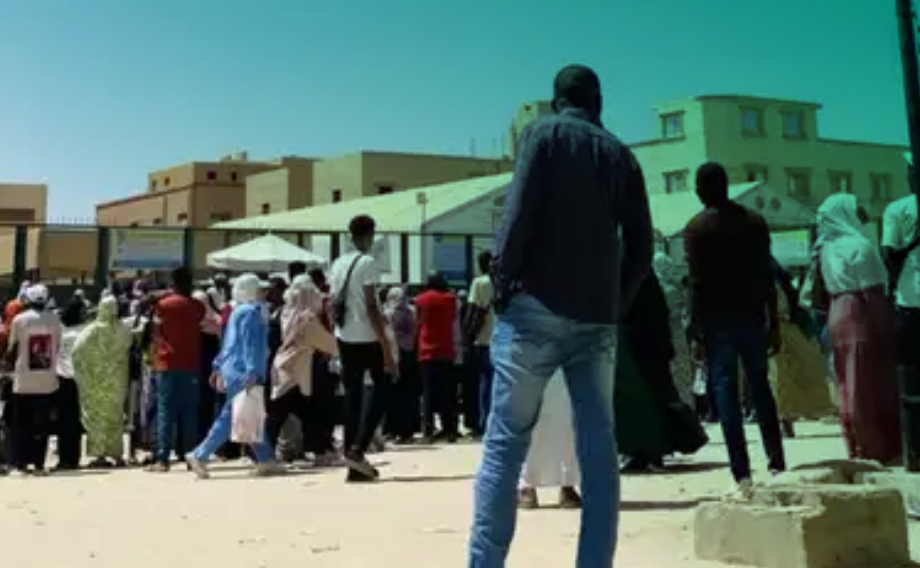
‘Gli ospiti dell’Egitto’ in pericolo: i rifugiati affrontano arresti e deportazioni crescenti
L’Egitto sta arrestando e deportando sistematicamente migliaia di rifugiati, indipendentemente dal loro status legale, in una repressione sempre più ampia che ha creato un clima di terrore e ha lasciato molti con paura di lasciare le proprie case.
Attraverso testimonianze di rifugiati, difensori dei diritti e una fonte di sicurezza, questo articolo rivela una politica sistematica di arresti e deportazioni di massa rivolte a sudanesi, altri cittadini africani e siriani, indipendentemente dalla loro documentazione, in Egitto. Queste campagne, giustificate come controlli di residenza, hanno portato a migliaia di detenzioni, ostacolato l’accesso a una rappresentanza legale e alimentato un clima di paura diffuso.
Circa una settimana fa, il cittadino sudanese di 67 anni Mubarak Qamar Eddin è morto all’interno della stazione di polizia di Shorouk. La notizia della sua morte è stata condivisa dalla pagina Facebook della Comunità Sudanese in Egitto, che condivide aggiornamenti con decine di migliaia di seguaci.
La polizia aveva fermato Qamar Eddin vicino a casa sua, mentre tornava da una panetteria vicina, secondo il post. Soffriva di diabete e insufficienza renale. La sua famiglia riuscì a consegnare i suoi farmaci alla stazione e l’ambasciata sudanese aveva iniziato a prendere provvedimenti per ottenere il suo rilascio. Ma dopo nove giorni di detenzione, morì.
Qamar Eddin era un rifugiato registrato e portava con sé una tessera UNHCR che confermava il suo status, rinnovata in ottobre. Tuttavia, non possedeva un permesso di soggiorno valido rilasciato dall’Amministrazione per i Passaporti, l’Emigrazione e la Nazionalità del Ministero dell’Interno. Invece, ha tenuto una ricevuta che mostrava il suo prossimo appuntamento per il rinnovo della residenza fissato per il 2 settembre 2027.
Il suo caso è uno di migliaia che coinvolgono rifugiati in Egitto che negli ultimi mesi sono stati sottoposti ad arresti, detenzioni e deportazioni forzate a un tasso crescente negli ultimi mesi, indipendentemente dal loro status legale, secondo rifugiati, difensori dei diritti e una fonte di sicurezza che ha parlato con Mada Masr.
“Non possiamo muoverci”, dice Nasr Eddin, un rifugiato sudanese di 50 anni arrivato in Egitto nel 2016. “Le persone vengono arrestate che abbiano o meno i documenti. Molte persone che conosco sono state detenute. C’è uno stato generale di terrore. Alcuni hanno paura di uscire di casa anche solo per comprare generi alimentari. I microbus della polizia pattugliano costantemente le strade.”
Ahmed, un rifugiato sudanese che in precedenza ha lavorato in attività di sensibilizzazione comunitaria con rifugiati sudanesi su progetti gestiti dal Center for Development Services, descrive un caso simile che si è concluso con la deportazione. Tre settimane fa, la polizia ha arrestato un rifugiato sudanese dal suo posto di lavoro nel quartiere Ard al-Lewa a Giza per non aver portato documenti d’identità. La sua famiglia portò rapidamente la sua valida tessera UNHCR e la prova di un appuntamento di rinnovo programmato. Tuttavia, a quel punto, la stazione di polizia aveva già presentato una denuncia accusandolo di non portare un documento d’identità.
Era malato e soffriva durante le settimane di detenzione. La stazione di polizia ha ripetutamente convocato la sua famiglia per portare farmaci prima che venisse emesso un ordine di espulsione, nonostante la sua valida tessera UNHCR.
Con il peggioramento della sua salute in custodia, la sua famiglia si è rivolta a un intermediario che ha accelerato le procedure necessarie presso l’Ambasciata sudanese e l’Amministrazione per i Passaporti, l’Emigrazione e la Nazionalità, acquistando un biglietto per il suo ritorno in Sudan — un processo che è costato circa 13.000 LE. Fu poi deportato.
I rifugiati etiopi descrivono casi simili a quelli di Mada Masr. Nasr, leader della comunità tra i rifugiati etiopi in Egitto, indica il caso di una donna etiope che è stata detenuta alla stazione di polizia di Dar al-Salam dal 20 gennaio dopo essere stata fermata mentre si recava al lavoro. La polizia ha citato la scadenza del suo permesso di soggiorno da rifugiato, anche se portava con sé un documento che confermava un rinnovo programmato, insieme a una valida tessera UNHCR.
Her husband sent an urgent appeal to UNHCR detailing the poor conditions of her detention and requesting guarantees against her forced deportation. The agency responded that it had been following the case since January 22, but she is still detained.
Last month, three Ethiopian refugees told Mada Masr that they were aware of cases in which Ethiopian refugees were detained and deported after their residency permits expired, despite holding UNHCR “blue” cards indicating formal refugee status. Some were pressured into signing deportation consent forms they did not understand due to language barriers and then deported to third countries.
UNHCR’s media office told Mada Masr that it had recently received “reports from some families of detained individuals” and that it continues to engage with the relevant authorities through official channels as part of its mandate to advocate for due process and ensure that international protection considerations are taken into account. The office stressed UNHCR’s focus on “respect for relevant fundamental principles, including the principle of non-refoulement.”
Karim Ennarah, research director at the Egyptian Initiative for Personal Rights (EIPR), tells Mada Masr that since the second half of 2024, the Egyptian government has launched broad campaigns targeting refugees with arrest, detention and deportation. Over the past three weeks, he says, the pace of these operations has reached an unprecedented level, carried out under the pretext of periodic residency checks and a census of irregular migrants.
According to Ennarah, refugee protection groups received complaints about the detention of around 5,000 refugees or migrants — most of them Sudanese, but also including other African nationals and Syrians — during the final two weeks of January alone. The campaigns, he adds, have involved a sweeping targeting of refugees and foreign nationals, particularly Sudanese and other African nationals more broadly, as well as Syrians, regardless of their legal status or residency documents, as individuals holding valid residency permits and UNHCR cards were also deported.
When refugees are detained, their families typically try to contact UNHCR so the agency can mobilize its partner legal organizations to intervene. But Ennarah and Ahmed say police practices frequently obstruct access to detainees, preventing UNHCR representatives and lawyers from reaching them and effectively denying them legal representation.
“We’re talking about a systematic policy, not something that used to happen randomly in the past because a police officer didn’t know what a blue card was or knew nothing about the UNHCR,” Ennarah says.
A source at the Interior Ministry who has taken part in recent arrest campaigns against refugees confirms this account. According to the source, the Passports, Emigration and Nationality Administration periodically issues orders to carry out what is internally referred to as a “foreigners’ campaign.” These operations are typically conducted in areas with high concentrations of foreign nationals, most often in Giza and Nasr City.
The timing of the campaigns, the source says, is determined by senior officials within the administration. They may take place once or twice a month — sometimes more frequently — continuing for a period before stopping “at the leadership’s discretion.”
“I received instructions to take part in the last three campaigns,” the source says. “Everything is carried out according to directives from the administration’s leadership.”
Officers are not instructed to target a specific nationality, the source adds. Rather, anyone identified as a foreign national may be stopped and asked to present their documents. “If the papers are in order, we let them go. If they’re not, we arrest them.”
Detainees are then questioned about the status of their residency renewal and requested to pay the US$1,000 regularization fee. If they cannot pay, they are asked whether someone else can do so on their behalf. If they pay, they are temporarily released. But if residency has lapsed for an extended period, or if the individual entered the country irregularly, deportation follows.
In Egypt, an asylum seeker first submits an application at UNHCR’s office in 6th of October City. They later receive a text message with an appointment date for an interview. At that interview, applicants who present complete documentation are issued a yellow asylum-seeker card, while those lacking proof of identity receive a white certificate. After undergoing refugee status determination interviews, some are granted a blue card recognizing official refugee status.
The second part of the process involves obtaining a residency permit from the Passports, Emigration and Nationality Administration. Holders of yellow or blue cards may request an appointment and apply for residency.
These documents require renewal: yellow cards every 18 months, blue cards every three years and residency permits annually.
In practice, however, the renewal process stretches on for months. Wagdy Abdel Aziz, director of the South Center for Refugee Rights, explains that although residency permits must be renewed each year, applicants are often given appointments months later — and in some cases told to “come back next year.” During these gaps, individuals are left without valid legal status and are therefore vulnerable to arrest. Abdel Aziz attributes the delays primarily to severe staff shortages within the administration relative to the volume of applications, resulting in continual postponements.
After the outbreak of war in Sudan led to a surge in displacement to Egypt, the government issued a decree in September 2023 requiring foreign nationals to regularize their status if they have an Egyptian host and can pay fees equivalent to $1,000. In 2024, Mada Masr reported how these fees pushed many newly arrived Sudanese to seek asylum through UNHCR instead.
The surge in arrivals has placed additional strain on UNHCR’s already limited capacity, slowing both registration and document renewals. Over the past two years, the agency has also faced sharp funding cuts that disrupted many of the services it provides to refugees.
The most significant delay, however, comes from the Passports, Emigration and Nationality Administration. Until recently, the administration was conducting interviews for the issuance or renewal of residency permits for only around 600 refugees and asylum seekers per day — at a time when the number of registered refugees and asylum seekers had surpassed one million, according to UNHCR’s latest figures from January. As a result, many refugees were left waiting two to three years to renew a residency permit valid for just one year, after the government extended its duration from six months in April 2025.
In mid-December, UNHCR announced that the administration had increased the number of daily interviews to 1,000, shortening waiting periods. But the improvement has fallen short of resolving the backlog.
According to Samy al-Baqir, spokesperson for the Sudanese Teachers’ Committee based in Egypt, waiting times for residency renewal still exceed a year and a half. This means many refugees continue to spend extended periods awaiting renewal — in some cases longer than the validity of their UNHCR cards — and new residency permits may already have expired by the time they are issued.
A UN source confirms the lengthy waiting periods for residency renewal, adding that police had previously shown greater leniency toward holders of yellow and blue UNHCR cards whose residency permits had expired while they awaited renewal. Now, however, they face heightened security harassment, the source tells Mada Masr.
In Ennarah’s view, what is unfolding reflects a fundamental shift in the Egyptian government’s approach to refugees since the second half of 2024, coinciding with the arrival of large numbers of Sudanese displaced by war. Historically, he says, Egypt maintained a relatively open stance, offering a minimum level of protection, including safeguards against forced deportation. Deportations did occur, but they were exceptions.
Over the past two years, he argues, the exception has become the rule. The government has adopted a pattern of recurring security campaigns targeting neighborhoods with high concentrations of refugees in Cairo, Alexandria and other cities, including home raids and mass arrests — practices the EIPR documented in an August report.
Ennarah points to figures cited in a memorandum issued by UN special rapporteurs on January 13 on the current state of refugee rights. The memorandum, which he describes as documenting “the collapse of the refugee and migrant protection system in Egypt,” found that documented cases of refugees detained by police — whether or not they held valid residency — rose from around 250 in the first quarter of 2024 to 1,125 in the first quarter of 2025.
It also cited a 121 percent increase in arrests of individuals registered with UNHCR between January and August 2025 compared with the same period the previous year, as well as a 150 percent rise in reported deportation incidents involving registered refugees, asylum seekers and holders of registration appointment receipts year-on-year over the same period.
The memorandum warned of mounting risks facing refugees in Egypt due to “the non-recognition of UNHCR registration appointment receipts as an effective protection tool prior to full registration, the failure to obtain legal residency in a timely manner and the increased risk of arbitrary arrest and deportation.” Ennarah describes the resulting situation as one in which “you are effectively forced into illegality.”
The campaigns have not distinguished between refugees and migrants, nor between those with valid residency and those without, he says. Some refugees have been deported despite holding valid residency permits after police confiscated their documents and referred them to prosecution without papers, leading to their transfer to the passports administration or the National Security Agency, which then issued administrative deportation orders.
While there has been particular focus on pursuing and deporting Sudanese refugees, Ennarah says this has increasingly taken on the character of skin-color-based targeting.
“I’ve seen it happen myself several times at Dokki metro station,” he says. “It’s an area with a large migrant presence. If you’re standing there and see a Sudanese person, it takes less than a minute before a police officer shows up and asks for their papers. Now, without exaggeration, any Black person walking down the street in Egypt is liable to be stopped by a police officer, asked for residency documents and arrested. If they’re lucky, they might get out.”
Ennarah notes that he has received numerous reports of similar incidents involving Kenyan, Nigerian and other African migrants.
A Kenyan migrant tells Mada Masr that police confiscated her passport in mid-December after stopping her in Maadi. Officers told her they were searching for a Nigerian cleaner accused of theft.
Egypt issued its own asylum law in December 2024, formalizing the government’s assumption of responsibility for reviewing and granting asylum applications — a role that UNHCR had carried out for decades.
Yet there are still no visible signs that the new asylum system has been implemented. The law stipulates the formation of a permanent committee for refugee affairs to decide on asylum applications within three months of its issuance, as well as the adoption of implementing regulations within six months. Neither step has been completed.
Ennarah points to the positives the law promises upon its implementation, such as guaranteeing refugees the right to work, healthcare and education. But he fears that “all of this will be meaningless” under an executive policy that lacks “the fundamental pillar: the ban on expulsion and the legal protection ensuring a person is not deported back to their country of origin.”
La legge si inserisce anche sullo sfondo dell’accordo di partenariato strategico dell’Egitto con l’Unione Europea per il 2024-2027, che include la cooperazione per contrastare il contrabbando di rifugiati e migranti attraverso il Mediterraneo. Allo stesso tempo, la retorica ufficiale degli ultimi due anni ha sottolineato l’accoglienza da parte dell’Egitto di quelli che le autorità definiscono nove milioni di “ospiti”, una cifra che il governo afferma supera la capacità del paese in un contesto di crisi economiche. La cifra si riferisce al numero totale di migranti internazionali residenti in Egitto, inclusi i rifugiati. Campagne online parallele hanno amplificato le narrazioni xenofobe, incolpando i rifugiati per difficoltà economiche, disoccupazione e criminalità.
La scorsa settimana, Saheeh Masr ha indicato una campagna online contro i rifugiati su X, in concomitanza con la recente escalation delle deportazioni. Secondo il post, la campagna è guidata da resoconti che hanno guidato campagne simili contro i rifugiati negli ultimi due anni.
In mezzo alle campagne in aumento, le ambasciate sudanese e siriana al Cairo hanno esortato i loro cittadini residenti o in cerca di rifugio in Egitto a garantire che portino sempre con sé documenti di residenza validi e di rifugiato. L’Ambasciata siriana ha descritto le misure come “campagne periodiche di ispezione” sullo status legale di tutti i cittadini stranieri, definendole una procedura ordinaria e ricorrente annualmente. L’ambasciatore sudanese al Cairo, Emad Eddin Adawy, ha espresso apprezzamento per quelle che ha descritto come le facilitazioni offerte dal governo egiziano ai cittadini sudanesi e ha detto di monitorare quelle che ha definito “campagne mediatiche sistematiche volte a minare la sacralità delle relazioni sudanesi-egiziane.”
Ma i rapporti e le fonti sui diritti umani descrivono un clima di terrore diffuso alimentato dalle campagne di arresti e deportazioni e dall’incertezza legale che circonda lo status di residenza — un clima che ha lasciato molti rifugiati spaventati di lasciare i loro quartieri, persino di andare a lavorare, portare i figli a scuola o comprare beni di prima necessità.
27/3/2026 https://progressive.international/







Lascia un Commento
Vuoi partecipare alla discussione?Sentitevi liberi di contribuire!